October 26, 2026
One Door Away: What I Learnt About Resilience by Waiting for a Disaster
Sometimes the Help You Are Looking For is Right Next Door
Read on Substack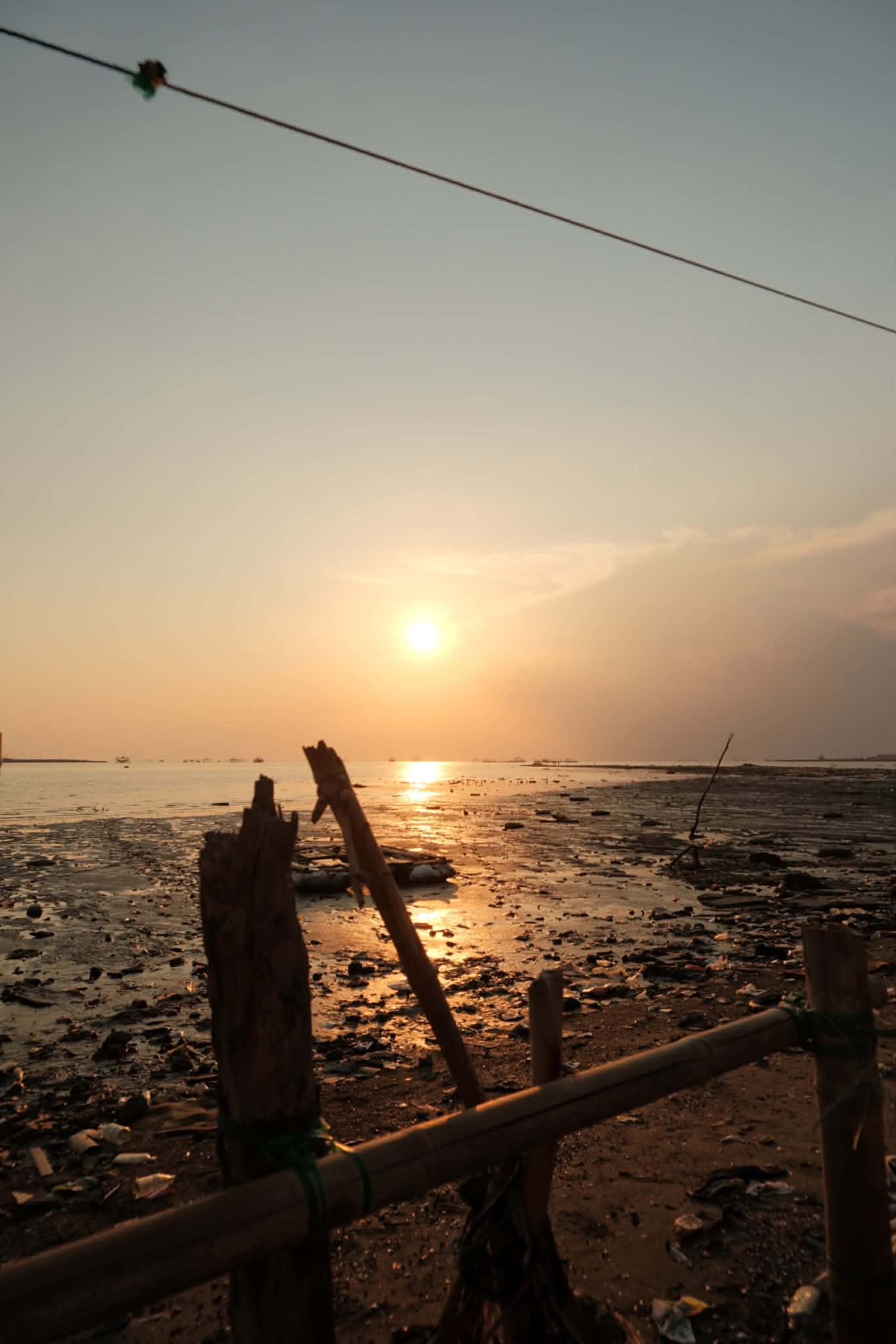
Photo of the seaside (“baybay”) where I conducted my research. Taken by Millen Salbibia
“Hi, how are you?”
“I’m okay.”
“You’re not okay.”
I remember being on the other end of a WhatsApp call with a friend on the other side of the world and feeling a wave of relief. Even without video, she could see right through me.
“I’m okay” is something we learn to say early. Somewhere along the way, we internalise the idea that it is not okay to be not okay. We treat resilience like a solo sport: a test of individual grit, of how much we can withstand without asking for help. We wait for a “big disaster” before we feel justified in leaning on someone else.
I know this impulse well.
I spent a year doing PhD fieldwork in the Philippines waiting for a disaster. Having grown up in Singapore, where natural disasters are virtually non-existent, I was eager to witness one firsthand. I had arrived during a La Niña season and found myself scanning the news for a storm I could chase.
Nothing happened. At least, not in the dramatic way I had imagined.
A volcano erupted, but only in my final month. Yet that quiet year taught me something more profound than how people survive catastrophe. It showed me how they live with the ordinary pressures of life through everyday acts of community.
After three years of shuttling between Singapore and the Philippines, adapting again and again, I began to see resilience differently. I experienced what it was like to have a support system around me, and what it felt like when that support was absent.
I began to recognise what happens when our internal resources can no longer sustain the demands around us. When we try to carry that weight alone, we stretch ourselves to breaking point.
But what if resilience is not simply about becoming tougher on your own?
What if it is about learning how to grow together?
We are often taught to imagine resilience as an individual achievement: the lone survivor standing against the storm. Asking for help can feel embarrassing, intrusive or even shameful. Maybe we have been hurt before. Maybe we have learnt to keep things to ourselves. Maybe independence has become so closely associated with strength that needing another person feels like failure.
Living elsewhere challenged that assumption.
I noticed that in some of the communities I encountered, asking for help seemed far more ordinary than I was used to. When I got curious and asked why, a friend explained the mindset simply: “If you don’t ask, you don’t get.”
I noticed something similar in Nairobi. My local friends often used the Swahili "word “akina”, which was used to describe a collective - “and company”. Someone might say they were going to akina Samuel’s house - Samuel and company. “We have no idea who exactly will be there,” someone explained. What struck me was the sense of a wider circle around the individual. There might be family, friends, neighbours, or whoever happened to be there.
That sense of “and company” stayed with me. I saw it in the way a friend would cook extra food, even while living in Singapore, or keep a guest room ready because “you never know who might show up.”
In the village where I stayed in the Philippines, people lived close to one another. It was almost impossible to stay completely out of each other’s lives. Neighbours’ voices were like morning alarms, and tsismis, or gossip, travelled faster than Facebook. People noticed when you left the house, when you stayed in, and who came to visit.
That proximity could be inconvenient and painfully transparent.
But it also meant people noticed things.
Around Christmastime, while I was there, a fire broke out in the village. I saw how quickly information spread and how rapidly people rallied together. This was not simply a response directed from the top down by official leaders. People already knew where to go, what to do, and whom to trust.
That trust had been built beforehand.
Those who stepped forward in crisis were often the same people who had already proven themselves through ordinary, repeated presence. They were the ones who showed up in day-to-day life. They were also connected to resources beyond the village—financial, social or spiritual.
I had seen many of them gathering in conversation over breakfast by the sea, watching fishermen return from the morning catch, or standing around the bomba, the well, while collecting water for their families.
This mattered because resilience did not suddenly appear when something went wrong. It was already there, embedded in ordinary relationships.
There is a phrase I encountered in Hiligaynon, on Negros Island: tupad balay. It literally means your next-door neighbour.
People visited one another’s homes often. Sometimes they knocked; sometimes they walked in calling, “Balay,” announcing that they had come to visit. They knew each other well, and being in one another’s lives was normal.
The idea stayed with me because it points to something we often miss when talking about resilience. Help does not always arrive only after a crisis has been formally declared. Sometimes it is already one door away.
We often wait for a major event—a tragedy, a disaster, a breakdown—before we give ourselves permission to need other people. But by then, we may be asking relationships to carry a weight they were never built to hold.
Community is not available on demand.
It has to be practised.
I thought these were lessons I had left behind in the Philippines when I returned to Singapore after three years of shuttling back and forth.
Then I was roped into organising my secondary-school batch reunion.
I found myself feeling the awkwardness of reconnecting. The last time I had spoken to some people was at the previous reunion, or even earlier. A name could still summon a face or a particular laugh, but bridging the distance between memory and who we had become took effort.
That experience reminded me that relationships need contact points, contexts and conversations.
Sometimes the practice is ordinary: seeing the same people regularly, noticing when someone’s behaviour changes, sending a message because something feels slightly off, asking for help before a situation becomes unbearable, or showing up for someone when it would be easier to stay uninvolved.
Sometimes it is as simple as saying, “Hey, how’s it going?”
Some people did not respond to the reunion invitation. Others told me, “This is timely,” even when they could not attend. For some, the invitation seemed to arrive at a moment when reconnecting mattered. I understood the feeling. After years of travel, there was something refreshing about returning to my roots.
What struck me, both in the Philippines and back home, was not some grand act of heroism. It was the way information, care and attention moved through ordinary social contact.
Because people saw one another regularly, they often noticed trouble before anyone formally named it.
That kind of awareness is easy to underestimate.
We tend to associate resilience with what happens after something goes wrong: how quickly a person recovers, how much pressure they can tolerate, how effectively a community responds to catastrophe.
But perhaps resilience begins much earlier.
In the village, it began with someone arriving at your door and calling, “Balay.”
It begins when someone knows you well enough to hear “I’m okay” and recognise that you are not.
It begins when someone notices when you are not there.
I went to the Philippines thinking that a disaster would teach me what resilience looked like.
Instead, I learnt it in the absence of one.
Resilience is not the ability to stand alone through a storm. It is the web of relationships that means we do not have to.
P.S. To see these community-based disaster responses in action, watch my mini-documentary series, Just One Door Away. For the research behind the film, you can explore my presentation at the University of the Philippines Asian Center or listen to my discussion on the NUS Risk Radar podcast.